Field Installation Standards — TDOT CIVIL
Back to Services
Field Standards

Field Installation
Standards & Controls

Installation requirements for flowerpots, drop types, sidewalk punches, pit securing, restoration, cable tagging, and as-built documentation — ensuring consistent, compliant execution across every project site.


01
Flower Pot Standards

Flower Pot Installation

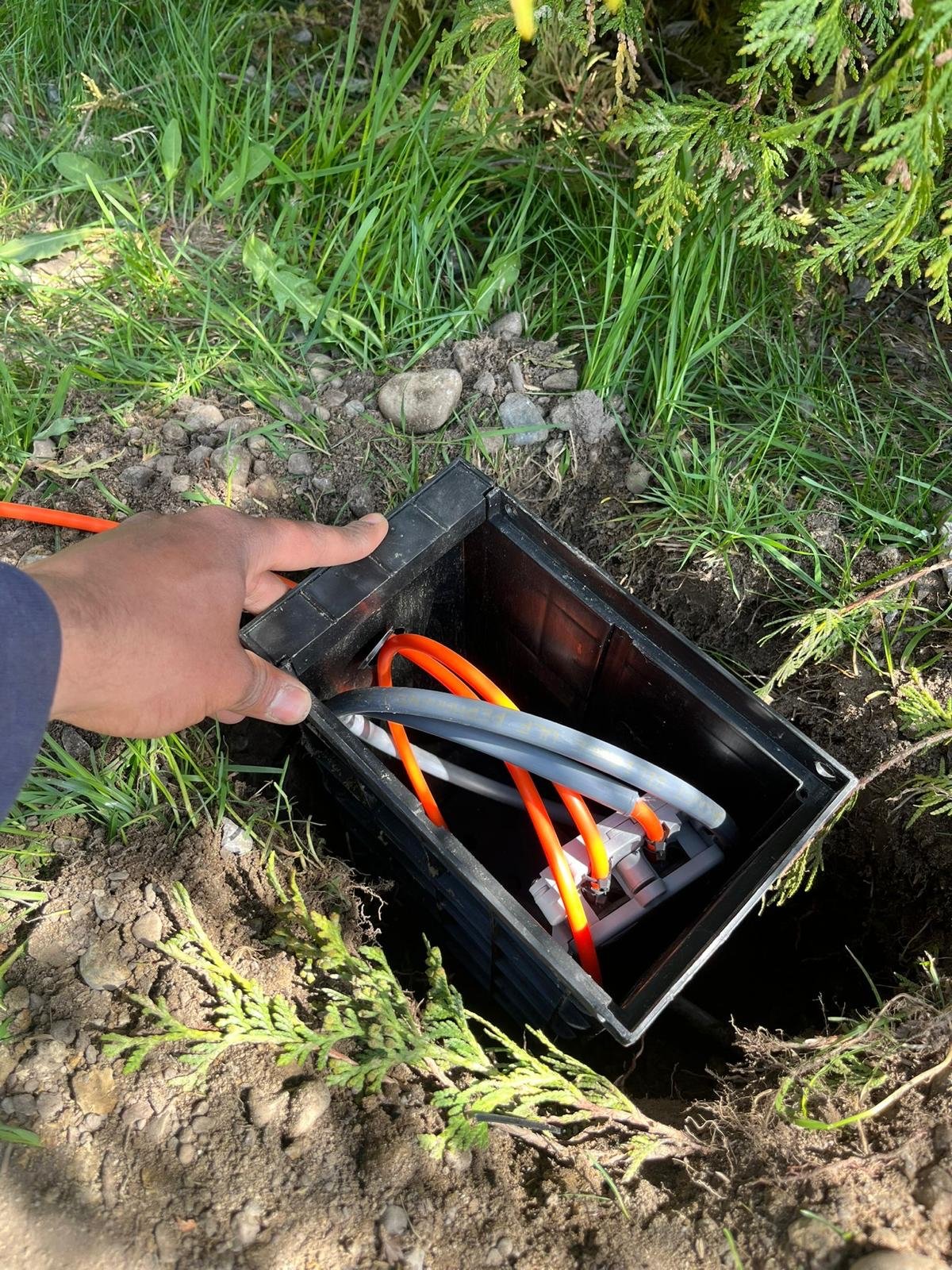
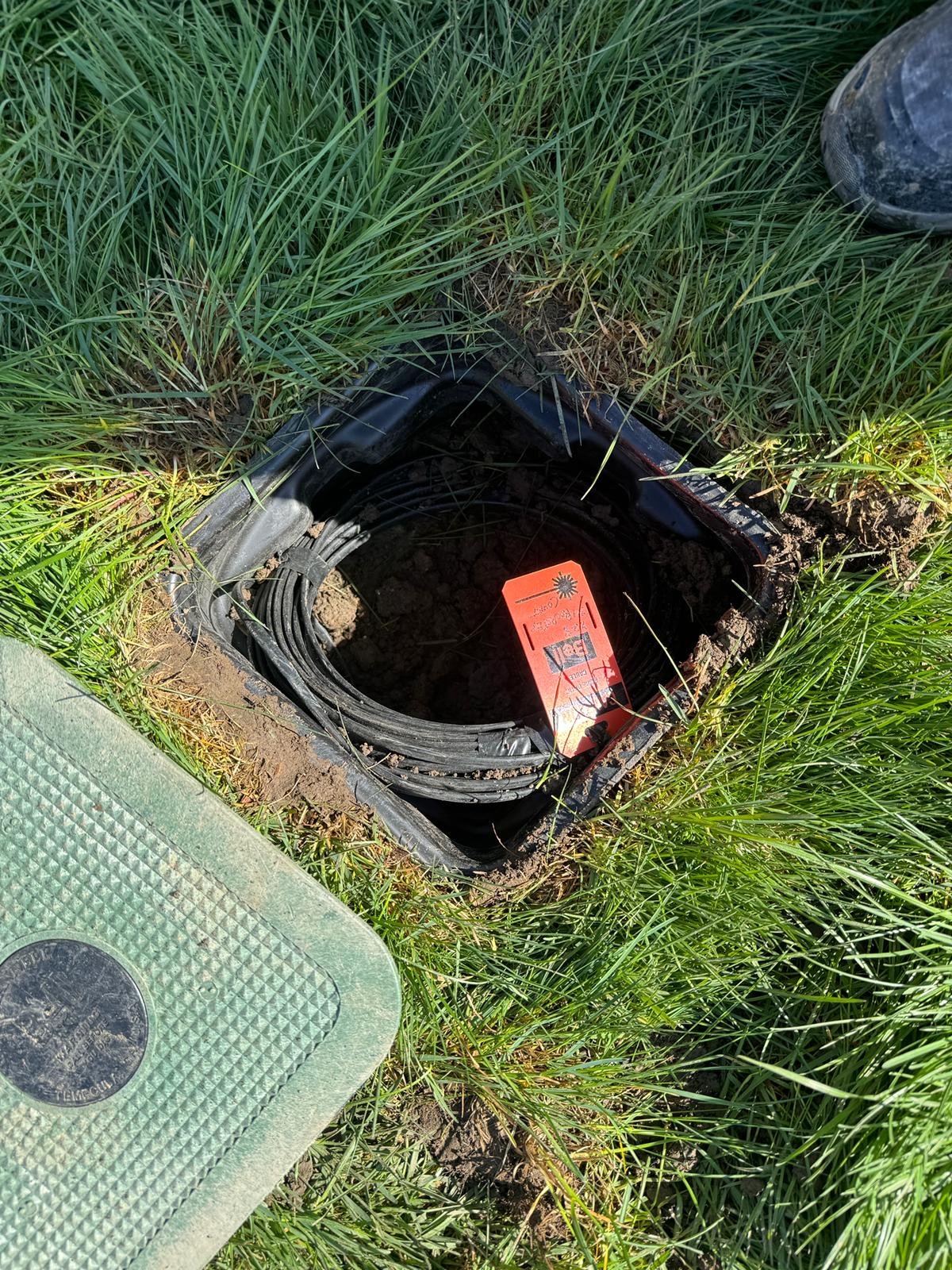
Every flowerpot is set flush to grade with capped, angled duct and a locate puck in place — ready for clean service connection.
Flower Pot Installation
Flower Pot Detail
Installation Requirements
Duct must extend a minimum of 4–6 inches above ground inside the flowerpot — no coils of duct underneath.
Duct must enter at a slight angle with no sharp bends — a bending jig must be used to prevent kinking.
All ducts must be capped upon completion — no open ends permitted at any time.
A rubber cap with a Locate Puck must be placed in the flowerpot hole for future identification.
Flowerpot must be set flush to grade, always placed 1 foot back from the property or street line.
Key Specifications
Duct Extension
4–6 in
Minimum above ground
Setback
1 ft
From property / street line
Entry Angle
Slight
Bending jig required
Grade Setting
Flush
No raised or sunken
Key Requirement

No coils of duct permitted underneath the flowerpot. Pathway must remain clear and unobstructed. 4–6 inch extension prevents moisture ingress and keeps connection points accessible.


02
Drop Types

Drop Installation Types

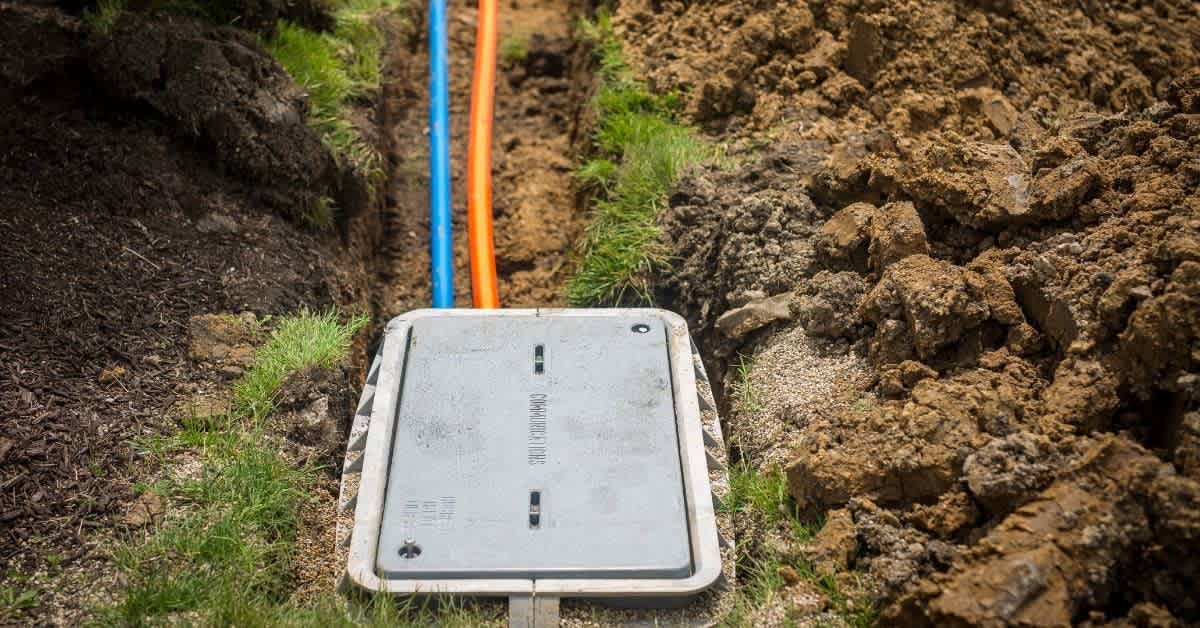
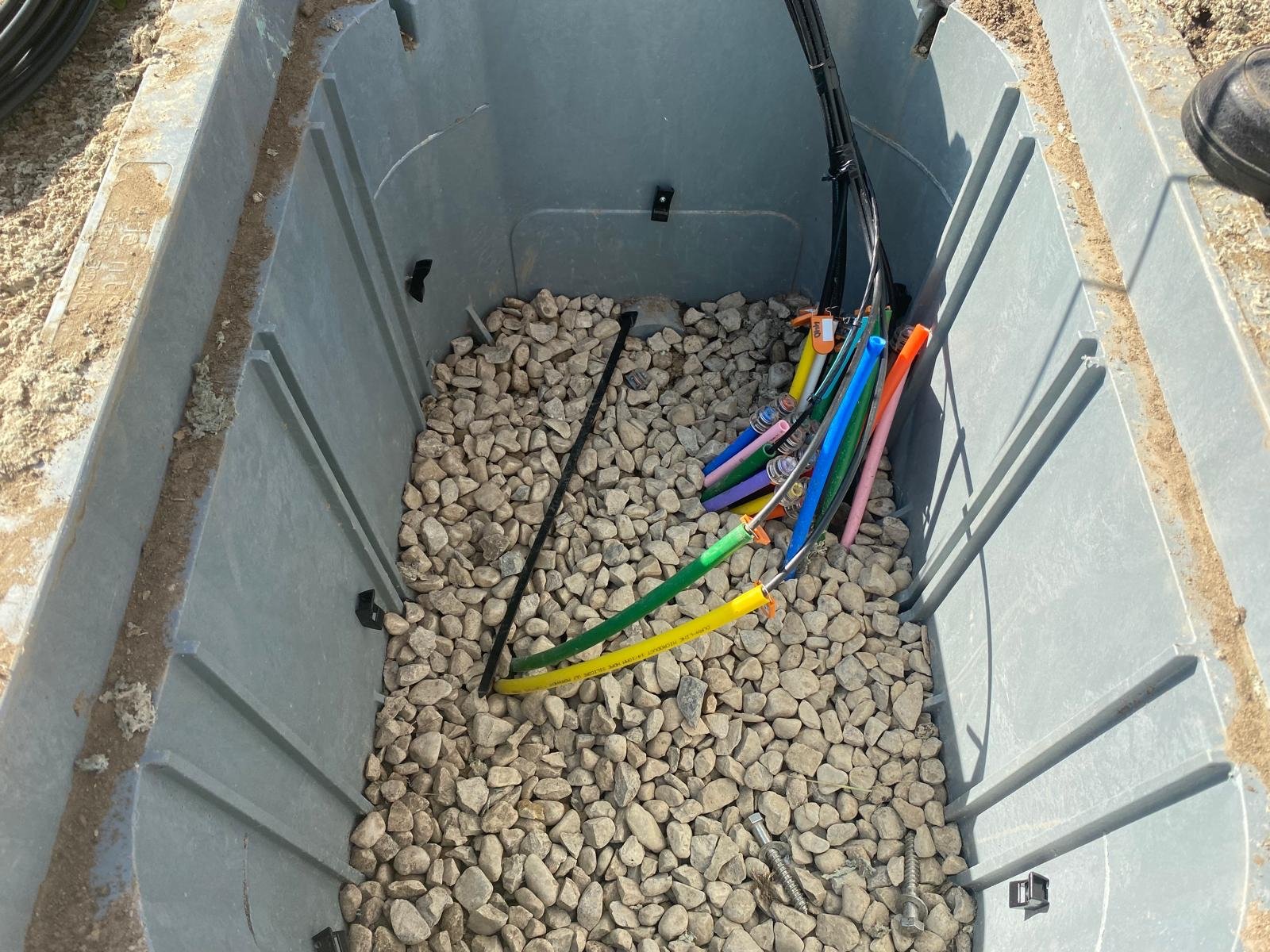
Three approved installation methods depending on existing infrastructure and site conditions. All types must meet the same final readiness standards.
Drop Installation
Drop Detail
Type 01 · Pre-Jetted

Pre-Jetted Drop

Installed through drilled duct infrastructure from GLB to flower pot, with appropriate slack for service connection.

Drilled Duct Infrastructure
Type 02 · Direct Buried

Direct Buried Drop

Used where no duct path is provided. Cable is buried along the approved route and protected at crossings where required.

No Duct Path Required
Type 03 · Direct

Direct Drop

Drop is routed through the flower pot and extended directly to the customer demarcation point for final connection.

Customer Demarcation

03
Sidewalk Punches

Sidewalk Punch Methods

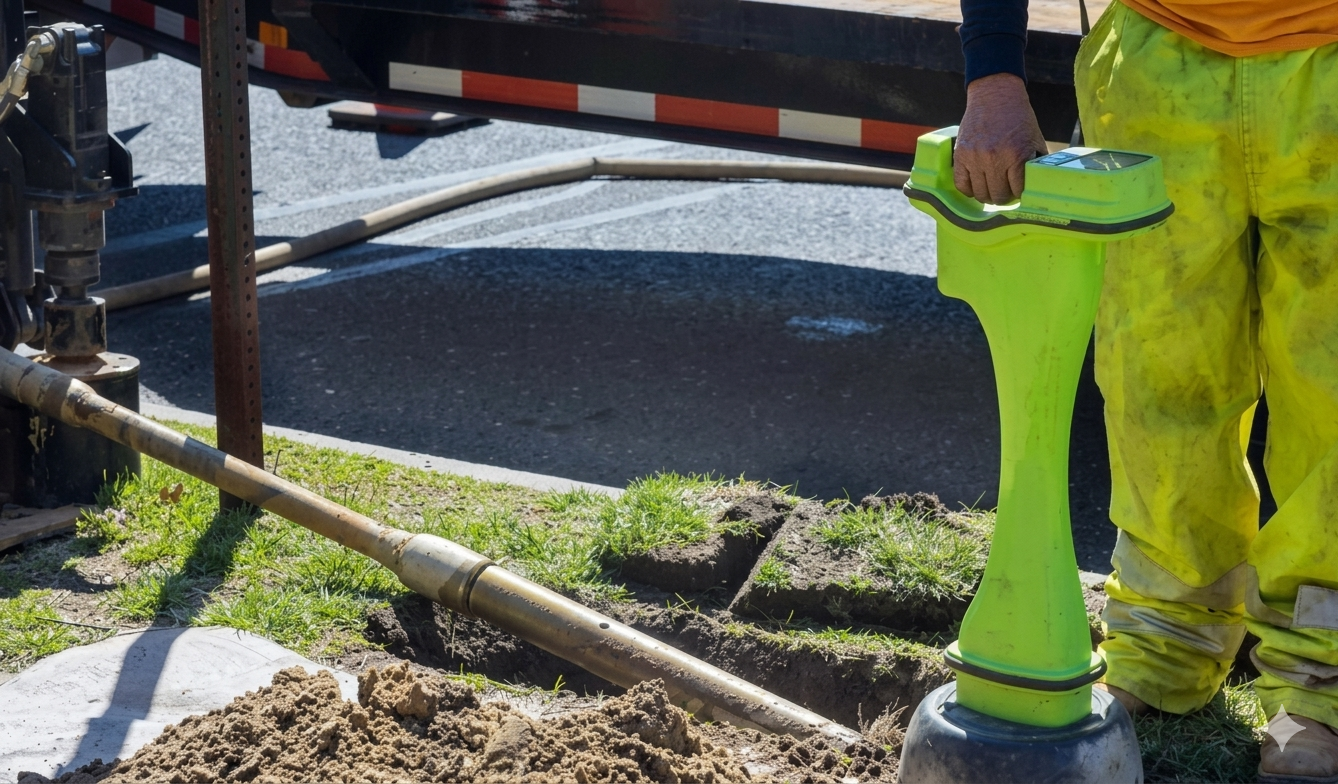
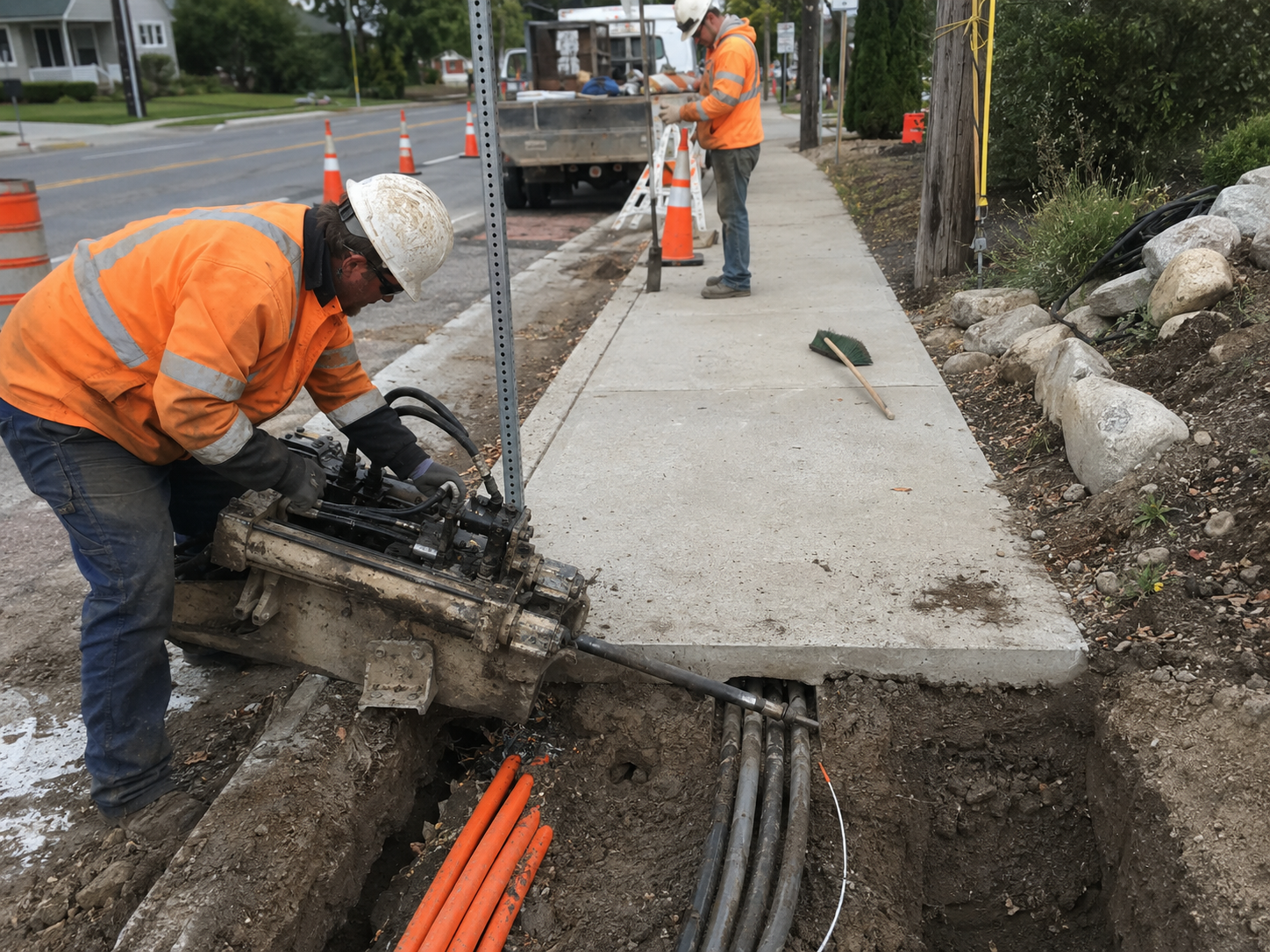
Controlled punch methods to cross beneath sidewalks while limiting surface disruption and protecting surrounding utilities.
Sidewalk Punch
Methods & Controls
Compact drilling equipment with locating technology to maintain accurate depth and alignment during crossings.
Tools selected based on surface conditions and crossing requirements — no one-size approach.
Vacuum excavation used where required in municipal areas for safe crossing activity.
Utility locates must be reviewed, daylighted where necessary, and verified before work begins.
Approved locate package must be on-site and confirmed reviewed before any crossing starts.
📋
Equipment Approach

Selection is determined by site conditions — soil type, crossing width, and proximity to utilities all factor into the method chosen by the field supervisor. Remote locate review is not accepted.

🎯
Three Core Priorities
Worker & Public Safety
Existing Utility Protection
Minimal Surface Disruption

04
Securing Pits

Pit Securing Protocols

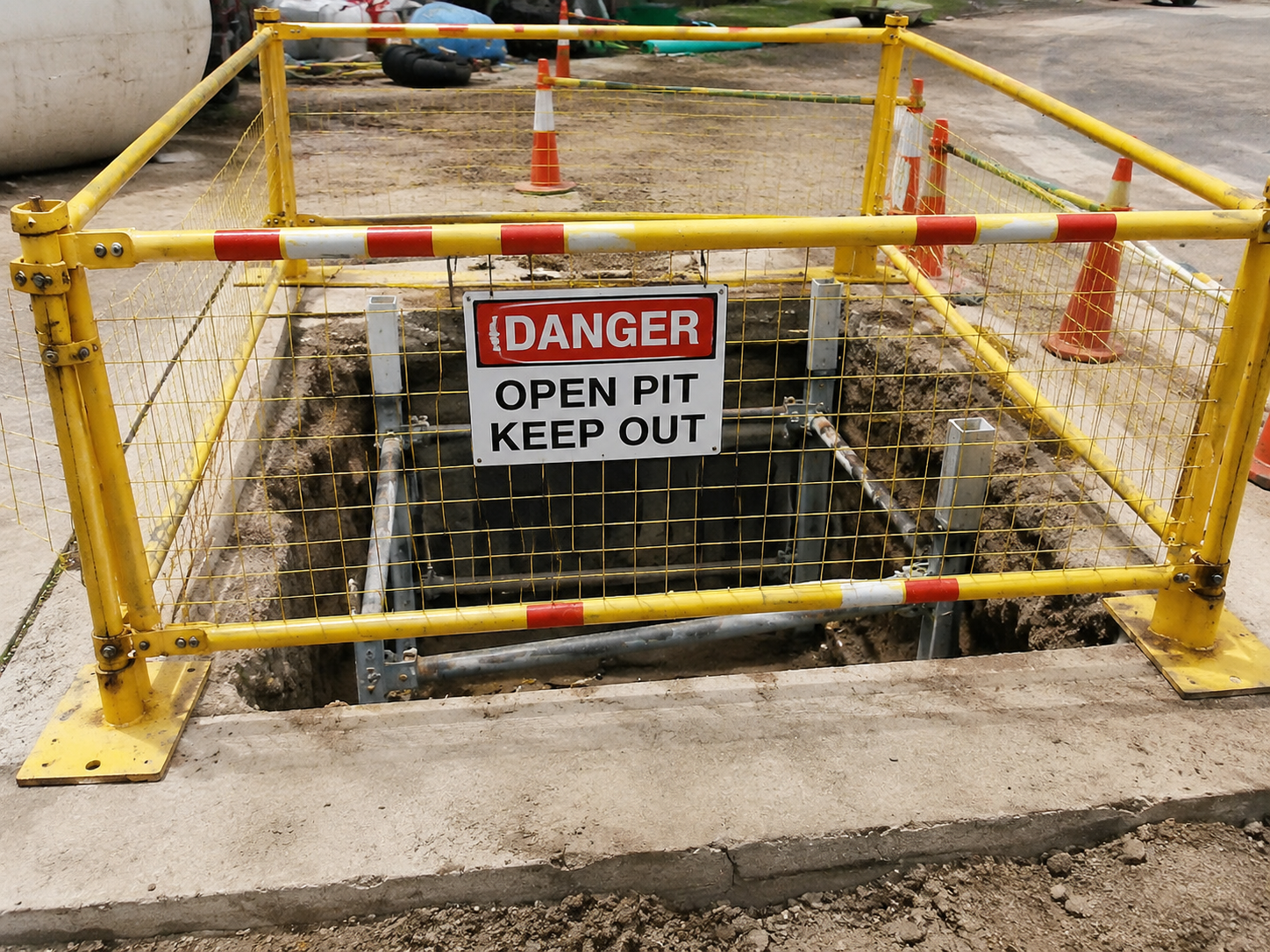
Strict pit securing protocols ensure public safety, prevent unauthorized access, and maintain a hazard-free job site throughout construction.
Pit Securing
Spec Summary
T-Bar Barriers
4
1 ft from each corner — rebar prohibited
Snow Fencing
Secured
Hole-free, ty-wrapped; upright at all times
Board Thickness
¾ in
Yellow painted, 6 in from pit edge
End-of-Shift
Zero
Unsecured pits — confirmed by supervisor
Full Requirements
All open pits secured using 4 T-bars, 1 foot from each corner — rebar strictly prohibited.
Snow fencing must be hole-free and secured tightly using ty-wraps — upright and intact at all times.
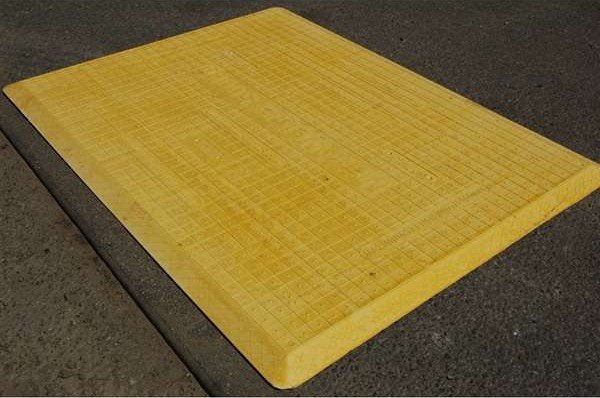
Protective boards minimum ¾" thick, painted yellow, layered 6 inches from pit edge.
All barriers remain in place until the pit is backfilled and restored — no exceptions.
⚠️

No pit may be left unsecured at end of any shift. Field supervisors bear direct responsibility for site compliance at departure.

🚫
Zero Tolerance Policy

No drill shot commences without a confirmed spotter in position and all locates reviewed, signed, and on-site. No pit left unsecured. Non-negotiable on every active site.

View All Services →

05
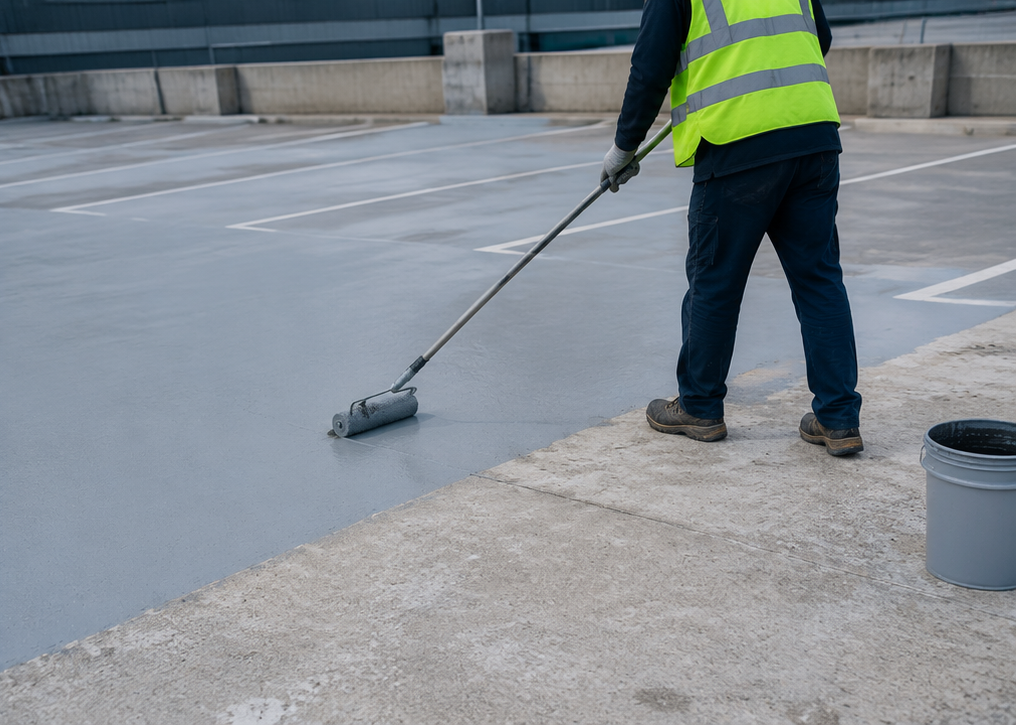
Restoration Standards

Surface Restoration

All affected areas restored to pre-construction condition or better — soft and hard surfaces finished to municipal and client requirements.

Flower Pot Installation
Flower Pot Detail
Soft Surface
Minimum 4–6 inches of quality topsoil (Triple Mix) applied to all soft-surface areas.
Seed or sod installed in accordance with municipal and client requirements.
Areas graded flush to surrounding surfaces — no depressions or high spots.
Final restoration blended with existing landscape for a seamless finish.
Hard Surface
Unshrinkable fill (U-Fill) in all hard-surface pits — no visible over-cuts.
HL3 hot asphalt patch to match existing road and driveway conditions.
Plate tamper and jumping-jack compaction for all surface types.
Interlock reinstated to original pattern and sealed with polymeric sand.
QC Sign-Off

All affected areas restored to pre-construction condition or better. Restoration is reviewed and signed off by QC prior to project close-out submission.


06
Tagging Practices

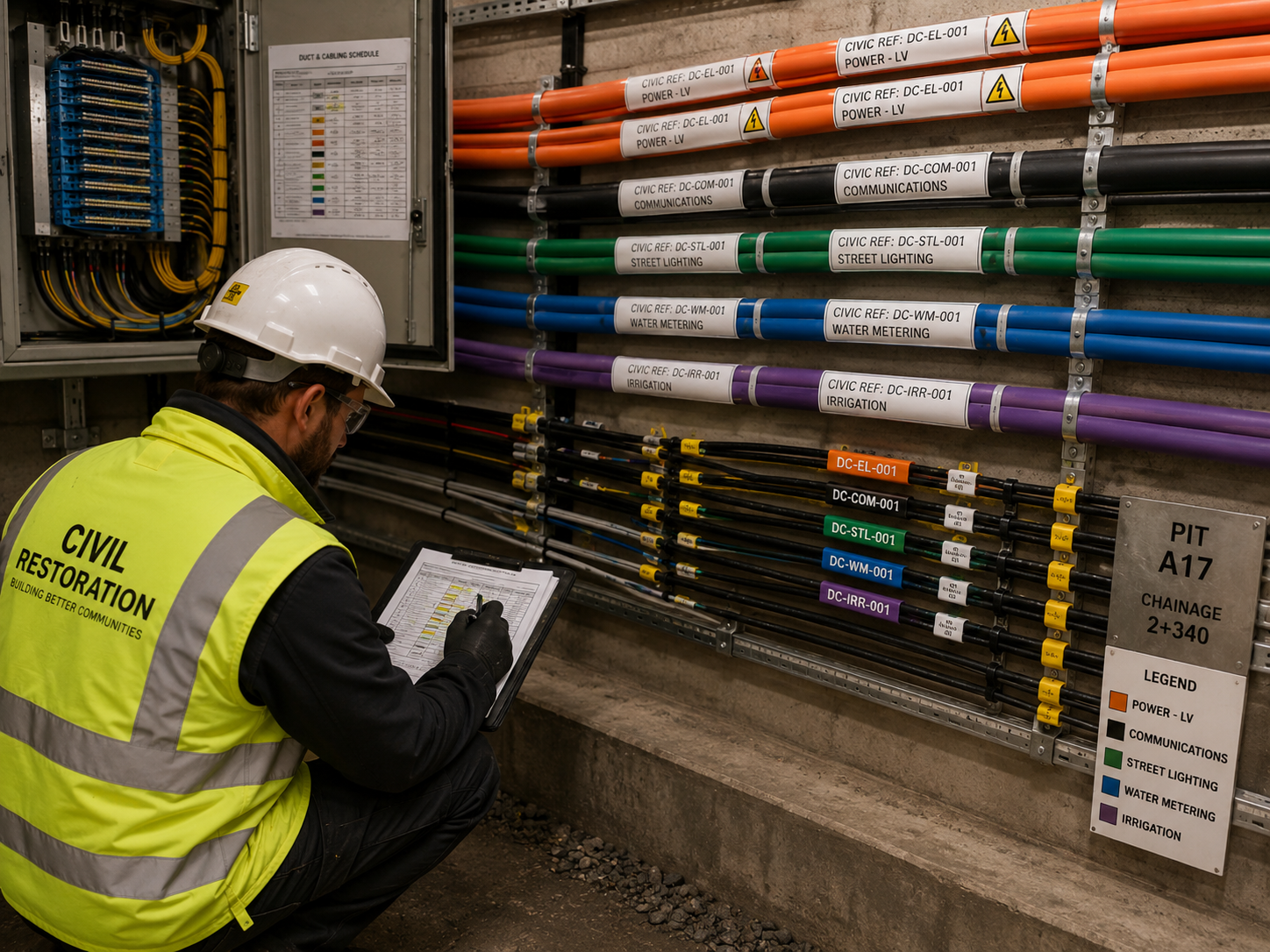
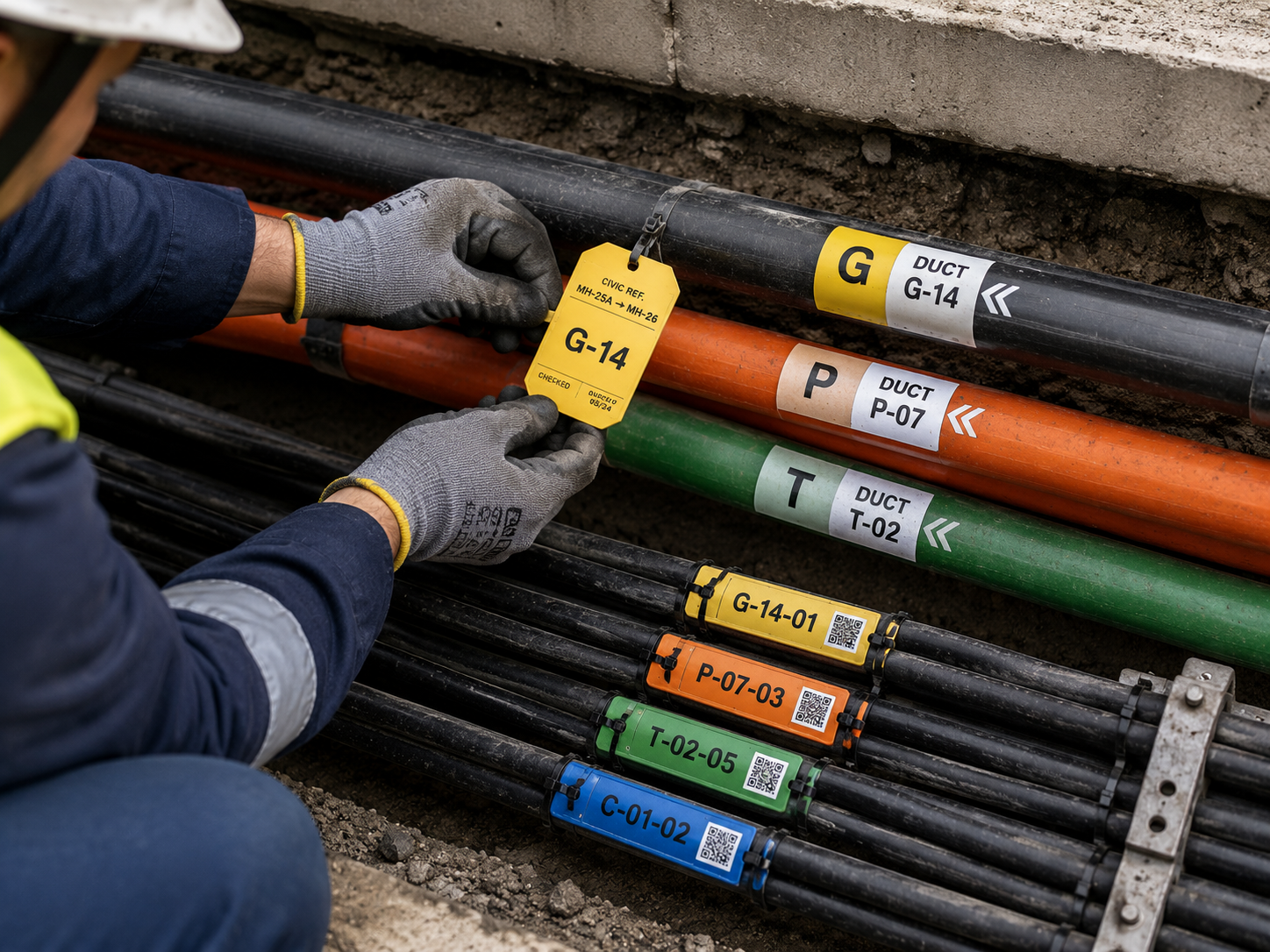
Duct & Cabling Tagging

Clear, durable identification on every duct and cable — tied to civic references and a designated color sequence for fast field verification.
Flower Pot Installation
Flower Pot Detail
Best Practices
All ducts clearly identified with the civic number of the property they serve.
Duct routing and labelling follow the approved distribution design and color sequence.
Fiber and drop cables tagged with the civic number of the final service location.
Labels kept legible, durable, and positioned for easy verification during install and maintenance.
Tags placed near cable ends or connector points for quick confirmation by field crews.
Color Tag Reference
Yellow
Feeder cables
Blue
Distribution cables
Green
Customer drop cables
🏷️
Civic Reference

All tags must include the correct civic reference for clear asset identification across the network.


07
As-Built & Close-Out

As-Built & Redlines

Complete, accurate as-built documentation supporting project close-out, field verification, and client record acceptance.
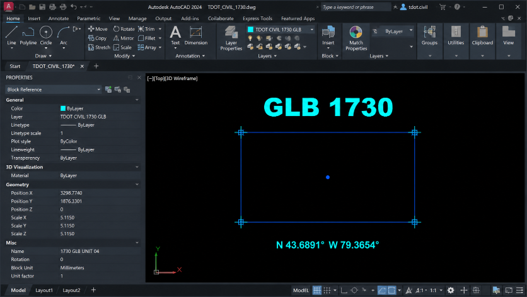
Flower Pot Installation
Flower Pot Detail
Redline Requirements
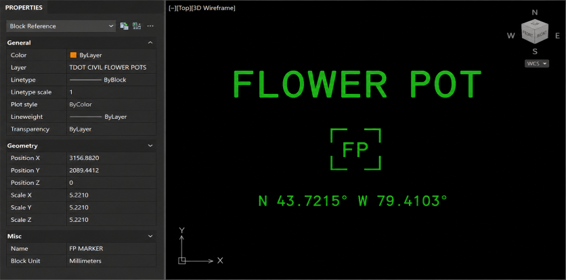
GPS coordinates required for key assets (flowerpots, GLBs), with offset measurements where applicable.
Driveway cuts, pits, trenches, and construction features measured and documented for final records.
All deviations shown in a dedicated redline layer and identified in the drawing legend.
Redlines include a brief description of each field change — what changed and why.
CAD drawings separate major asset types into clear layers (GLBs, flowerpots, pits, redlines).
Final as-builts issued in both PDF and CAD formats for turnover and close-out.
Final Restoration Checklist
Final testing and site verification completed before close-out.
Temporary equipment, signage, and debris removed from the work area.
Trenches, pits, landscaped areas, and hard surfaces fully reinstated.
Ducts capped, labelled where required, and left in clean condition.
Restored areas finished flush to grade with required seed or sod treatment.
Site reviewed to confirm no safety hazards or open deficiencies remain.
Final walkthrough completed prior to project turnover and acceptance.
Layer Identification
Asset · FP Marker
FLOWER POT
Layer: TDOT CIVIL FLOWER POTS
N 43.7215° W 79.4103°
Asset · GLB Unit
GLB 1730
Layer: TDOT CIVIL 1730 GLB
N 43.6891° W 79.3654°
Asset · GLB Vault
GLB 2436
Layer: TDOT CIVIL 2436 GLB
N 43.6887° W 79.3641°